
Arrest Records in Baltimore County
An arrest record begins at the moment of booking. After an arrest in Baltimore County, a person may be taken in for identification, a property inventory, medical and mental-health screening, and classification. Law-enforcement agencies create the first entries. The Baltimore County Sheriff's Office serves court process, warrants, and court-related security duties, while local and state police make most street arrests. The county Department of Corrections then handles intake at the jail. So an arrest record is really a law-enforcement and corrections file, not a court file.
It helps to keep three things apart. An arrest record shows that someone was taken into custody and the charges police listed. A criminal court record starts later, once a prosecutor files charges and the case opens in court. A conviction record reflects a final outcome after a plea or verdict. Arrest does not equal guilt. Full criminal case history, with pleadings and dispositions, lives in the court file, which is covered on the Baltimore County court records page.
One warning matters before any search. Baltimore County is not Baltimore City. They are separate jurisdictions with separate police, separate corrections, and separate court entries. Searchers mix them up often, so confirm the county each time.
How to Search Baltimore County Arrest Records
There is no single open arrest blotter for the county. No official public searchable Baltimore County jail roster was located in county sources, and the official pages reviewed did not post a public mugshot roster. So finding recent arrests means combining a few official routes. The Department of Corrections publishes inmate-information and contact processes rather than an open roster with booking number, pod, and bond fields. The Maryland Judiciary Case Search system is the best public tool for charges, bail-review entries, and court dates once a case is open.
- Start at Maryland Judiciary Case Search, accept the disclaimer, and search by name or case number. Filter to Baltimore County, not Baltimore City.
- Check the Baltimore County inmate information page for the official intake and contact process if you think the person is in the county jail.
- For state custody, run the name through the Maryland DPSCS Inmate Locator; for federal custody, use the Bureau of Prisons locator.
- Set up VINELink notifications to track custody status and release events where available.
Have the full legal name and a date of birth ready. Name searches return many unrelated people, so a case number from a notice or charging document is far more reliable.
Arrest Records vs. Criminal Court Records
The split between an arrest record and a criminal court record trips up a lot of people. An arrest record is made by police or the sheriff at booking. A criminal court record is opened by the court clerk once charges are formally filed. They can hold different facts about the same event. A person can be arrested without ever being charged, and a charge can be dropped long before trial. Below is a quick side-by-side.
| Arrest Record | Criminal Court Record | |
|---|---|---|
| Source | Sheriff or police | Court clerk |
| Created When | At booking | When charges are filed |
| Contents | Booking info, listed charges, custody status | Pleadings, motions, hearings, disposition |
| Where to Look | Corrections, Sheriff, DPSCS | Maryland Case Search, Clerk's office |
Note: A booking charge can change once the State's Attorney reviews the case, so the charge police listed at arrest may not match what the court file later shows.
Charges vs. Convictions
Being charged is not the same as being convicted. A charge is an accusation. A conviction is a final result after a guilty plea or a verdict. Many cases end in dismissal, nolle prosequi, a stet, an acquittal, or probation before judgment. Each of those is a different disposition, and none of them is a conviction. Reading an arrest record without checking the final disposition can give a badly wrong picture of someone's history.
| Charge | Conviction | |
|---|---|---|
| Stage | Accusation at arrest or filing | Final plea or verdict |
| Burden of Proof | Probable cause | Beyond a reasonable doubt |
| What It Proves | Police believed an offense occurred | Guilt was established in court |
| Public Record | Yes, unless restricted | Yes, unless shielded |
For the meaning of terms like nolle prosequi, stet, or probation before judgment, the court file shows the exact disposition. Always read it through to the end before you draw a conclusion.
Sealed vs. Expunged Records
Maryland uses a few tools to limit access to old criminal records, and they are not the same. Sealing closes a record under statute or a court order, but the file still exists and certain parties keep access. Expungement removes eligible records from public access entirely after a valid court order. Shielding is a third path that limits public access to some conviction records without destroying the underlying government file. The table draws the line between the two most-asked-about options.
| Sealed | Expunged | |
|---|---|---|
| Visibility | Closed to ordinary public access | Removed from public access by court order |
| Law Enforcement | Limited access by statute or order | Very limited; treated as removed |
| Governing Path | Court order or statute; shielding limits access without destroying the file | Petition under Criminal Procedure expungement law |
| Eligibility | Depends on case type and legal standard | Depends on disposition, offense, and waiting period |
Maryland's core expungement statute is Md. Code, Criminal Procedure § 10-105, which sets eligibility for removing qualifying criminal records from public access. The Maryland Judiciary screenshot below comes from the official expungement help page and shows where to start the process.
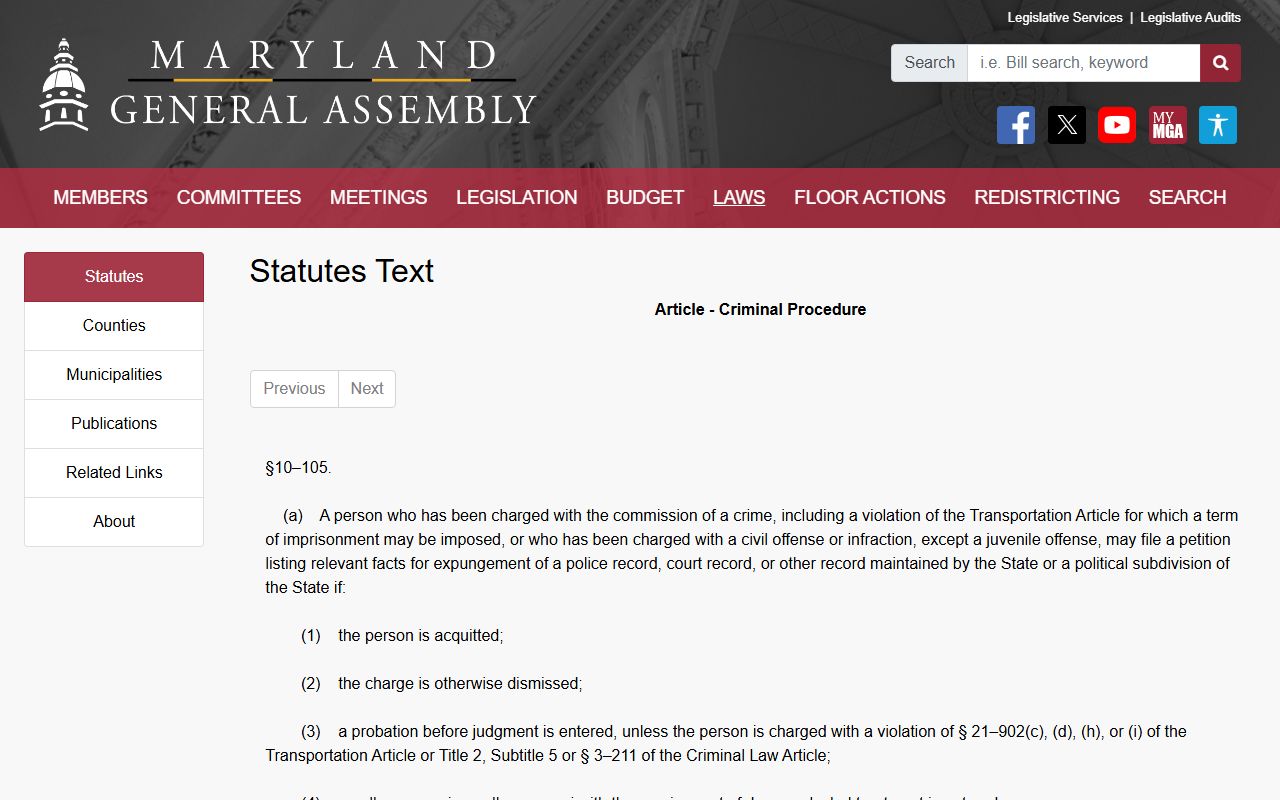
A person usually files the correct expungement petition in the court where the case was decided. Acquittals, dismissals, nolle prosequi, stet dispositions, eligible probation before judgment, and certain convictions after waiting periods may qualify. The State's Attorney may object. Free help and forms are at the Maryland Judiciary expungement help center.
Shielding a Criminal Record in Baltimore County
Shielding sits between sealing and full expungement. It limits public access to certain eligible conviction records but does not erase every government trace, and it leaves access open for specified agencies and authorized employers. That difference matters for jobs, housing, and licensing, because shielding does not act like expungement in every context. Shielding is governed by Md. Code, Criminal Procedure § 10-110, which limits public access to qualifying matters while preserving law-enforcement and authorized access.
The official shielding guidance from the Maryland Judiciary is shown below.
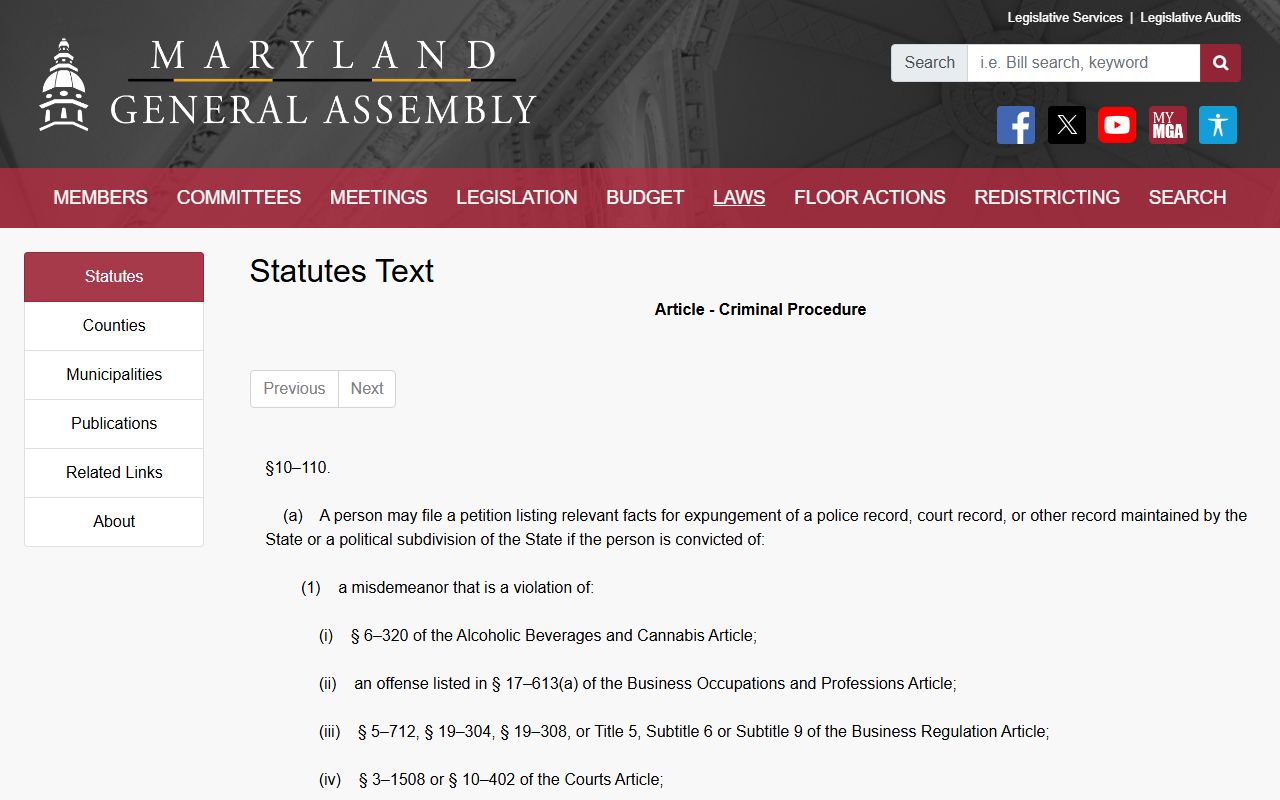
The image points to the same statute and process a Baltimore County resident would follow when a conviction is eligible for shielding but not expungement.
Mugshots and Booking Photos
Mugshots are booking photos taken at intake. People expect a public gallery, but Baltimore County's official pages reviewed did not provide a public mugshot roster. Arrest photos may be restricted by agency policy, by investigation status, or by privacy rules. So there is no county website where you can browse recent mugshots by name.
If a booking photo exists in a court or agency file, it is handled under the same access rules as the rest of that record. A police report, for example, is an agency record and not a court docket record, so it is requested from the law-enforcement agency under its own process and the Maryland Public Information Act, not pulled from Case Search.
State's Attorney and Public Defender
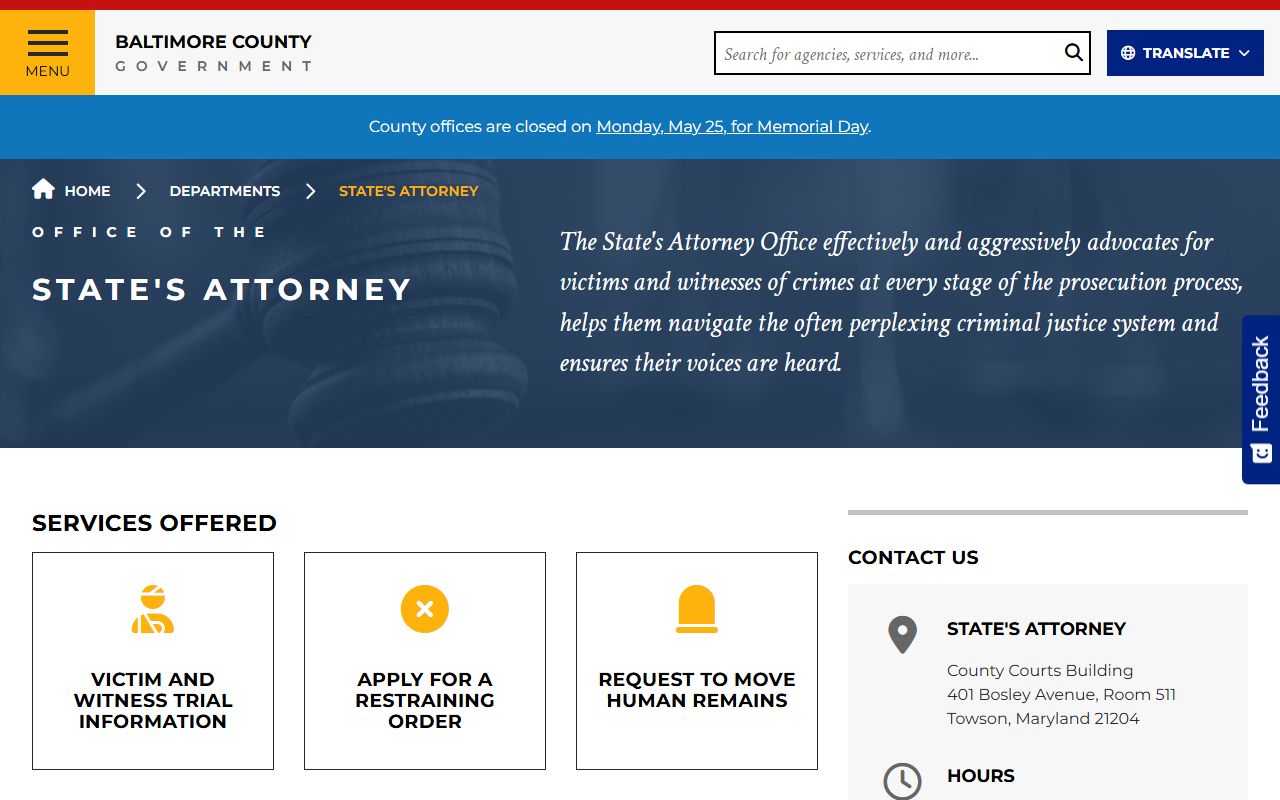
Maryland uses the title State's Attorney, not District Attorney. The Baltimore County State's Attorney prosecutes criminal cases, works with law-enforcement agencies, and runs victim and witness services. The office reviews booking charges and decides what to file, which is why the charge in the court file can differ from the one police listed at arrest. Typical divisions include felony, District Court misdemeanor, juvenile, special victims, narcotics, and appeals.
The State's Attorney homepage is shown below.
On the other side, indigent defense runs through the Maryland Office of the Public Defender. A person seeking appointed counsel must apply and meet eligibility rules. Apply promptly after arrest, because bail review, the preliminary hearing, and plea deadlines move fast.
Background Checks and Criminal History Limits
Casual lookups and formal background checks are different things. A Case Search lookup shows public docket entries. A regulated background check for employment, housing, or credit must follow federal and state rules, and the dissemination of formal criminal-history record information is controlled. Maryland governs that dissemination under Md. Code, Criminal Justice Information § 10-616, which limits who may receive criminal-history record information and for what purpose.
The statute text is shown below from the official Maryland code page.
That law explains why an arrest record found online is not a substitute for a compliant background report. Expunged or shielded matters should not appear in proper reports, and an arrest with no conviction should be read with care.
Important: This site is private and is not a consumer reporting agency under the FCRA, so the records here may not be used for employment, tenant, credit, or insurance decisions.
Restricted Criminal Records in Baltimore County
Not every arrest or criminal record is open to the public. Several categories are confidential by statute or court rule, and they will not appear in an ordinary Case Search result. Knowing which ones are blocked saves time and avoids wrong assumptions about a clean-looking record.
- Juvenile records, restricted under Md. Code, Courts & Judicial Proceedings § 7-303, with access limited to parties, counsel, and authorized persons.
- Expunged records removed from public access by court order.
- Shielded conviction records with limited public access.
- Sealed civil or family files closed by court order.
- Mental-health and commitment records protected by health privacy law.
- Records with protected personal data such as Social Security or financial account numbers.
Mandatory denial of access is built into the Public Information Act at Md. Code, General Provisions § 4-301, which requires custodians to withhold records when disclosure would break the law. That is why a confidential juvenile or sealed file cannot be released through a public-records request.
Note: A blank result in a public search does not always mean no record exists, since a matter may be sealed, expunged, juvenile, or simply filed in another jurisdiction.